Posted On: May 13, 2026
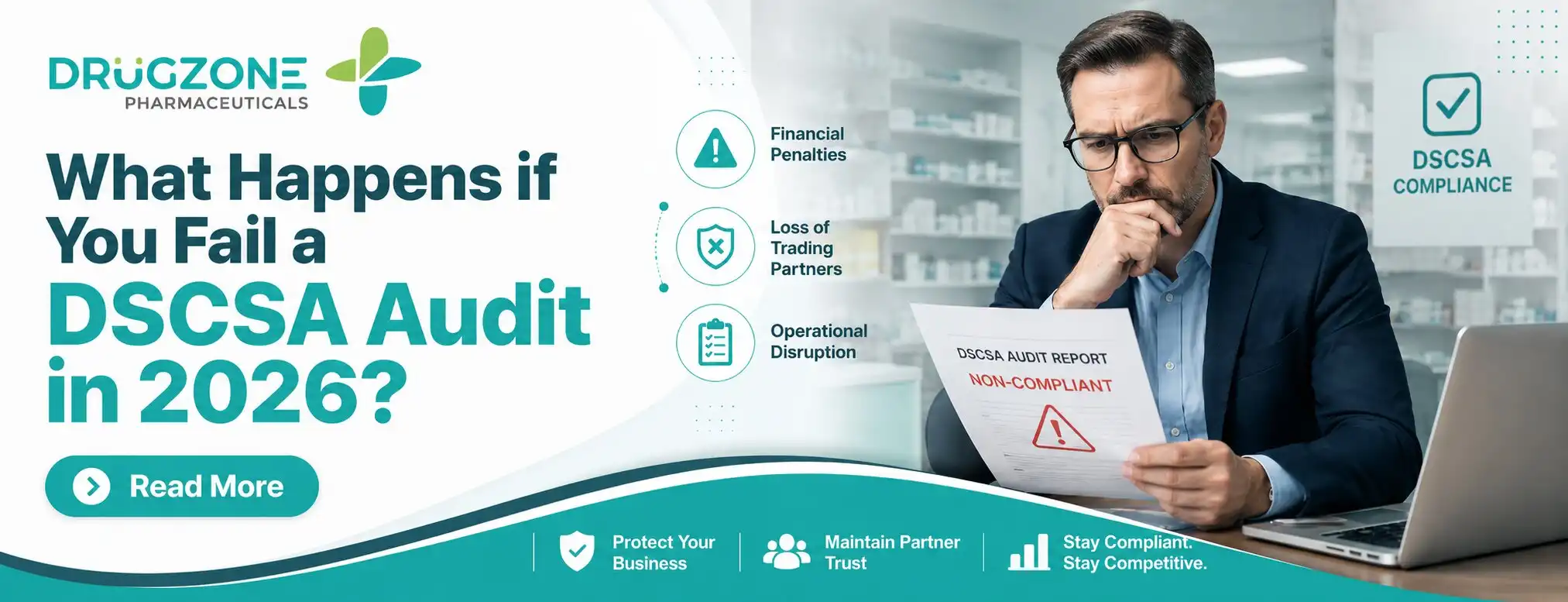
Understanding the Penalties: What Happens if You Fail a DSCSA Audit in 2026?
The pharmaceutical supply chain is under closer scrutiny than ever. By 2026, enforcement of the Drug Supply Chain Security Act (DSCSA) is expected to be more rigorous, with authorities focusing on full compliance across all trading partners. For distributors, failing a DSCSA audit can lead to serious operational, financial, and legal consequences.
This blog explains what happens if a company fails a DSCSA audit, the penalties involved, and how businesses can stay compliant.
What Is DSCSA and Why Does It Matter
The Drug Supply Chain Security Act (DSCSA) was introduced to enhance the security of the pharmaceutical supply chain in the United States. It requires:
- End-to-end product traceability
- Verification of prescription drugs at the package level
- Secure and interoperable data exchange
- Detection and removal of illegitimate products
The law is enforced by the U.S. Food and Drug Administration, which conducts inspections and audits to ensure compliance.
What Is a DSCSA Audit?
A DSCSA audit is a regulatory inspection where authorities evaluate whether a company is following required compliance standards.
During an audit, inspectors typically review:
- Product tracing systems
- Verification processes
- Transaction documentation
- Handling of saleable returns
- Systems for identifying suspect or illegitimate products
If gaps or violations are found, the company may fail the audit.
What Happens If You Fail a DSCSA Audit in 2026?
Failing a DSCSA audit can trigger multiple consequences, depending on the severity of the violation.
1. Warning Letters and Observations
The first step often involves:
- Issuance of FDA Form 483 (inspection observations)
- Formal warning letters outlining compliance failures
These documents highlight deficiencies and require corrective action within a specific timeframe.
2. Financial Penalties
Companies may face monetary penalties for non-compliance, including:
- Civil fines for regulatory violations
- Costs associated with corrective actions
- Increased compliance expenses
Repeated violations can result in higher penalties.
3. Product Recalls
If non-compliance leads to risk in product safety:
- Products may be recalled from the market
- Distribution may be temporarily halted
- Additional scrutiny may be applied to all future shipments
Recalls not only affect finances but also damage credibility.
4. Suspension of Operations
In serious cases:
- Authorities may suspend distribution activities
- Licenses may be revoked or restricted
- Business operations may be paused until compliance is restored
This can severely disrupt supply chains and client relationships.
5. Legal Consequences
Failure to comply with DSCSA requirements may result in:
- Legal action by regulatory bodies
- Liability in case of patient harm
- Increased scrutiny in future inspections
Legal complications can be long-term and costly.
6. Loss of Business Trust
Beyond regulatory penalties, failing an audit impacts reputation:
- Loss of trust among partners and clients
- Difficulty securing contracts
- Reduced credibility in the market
Trust is critical in pharmaceutical distribution, and rebuilding it can take time.
Key Compliance Areas Where Companies Fail
Many audit failures occur due to gaps in specific areas:
- Incomplete or missing transaction records
- Failure to verify saleable returns properly
- Lack of interoperable systems
- Poor handling of suspect or illegitimate products
- Inadequate staff training
- Weak documentation practices
For a Pharmaceutical wholesale distributor, even minor gaps can lead to significant compliance issues.
How to Prepare for a DSCSA Audit
Preparation is essential to avoid penalties and ensure smooth operations.
Establish Strong Documentation Practices
- Maintain accurate transaction histories
- Keep verification records updated
- Ensure easy access to audit data
Implement Reliable Verification Systems
- Use barcode scanning technology
- Integrate track-and-trace systems
- Enable real-time product verification
Train Your Team
- Educate staff on DSCSA requirements
- Conduct regular compliance training
- Assign clear responsibilities
Conduct Internal Audits
- Review processes regularly
- Identify gaps before official inspections
- Take corrective actions promptly
Strengthen Vendor Coordination
- Work closely with manufacturers
- Ensure timely data exchange
- Verify partner compliance
Role of Technology in DSCSA Compliance
Technology plays a critical role in meeting audit requirements:
- Automated systems reduce human error
- Real-time tracking improves transparency
- Centralized databases simplify record management
- Faster verification processes improve efficiency
Without proper systems, maintaining compliance becomes difficult.
Why Compliance Matters More in 2026
By 2026, DSCSA enforcement is expected to be stricter due to:
- Full implementation of interoperable systems
- Increased focus on product-level traceability
- Greater accountability across the supply chain
For every Pharmaceutical wholesale distributor, compliance is no longer optional. It is a fundamental requirement for operating in the market.
Long-Term Impact of Audit Failure
Failing a DSCSA audit can have lasting effects:
- Increased frequency of future inspections
- Higher compliance costs
- Reduced operational flexibility
- Long-term damage to brand reputation
Companies that fail to address issues quickly may struggle to recover.
Conclusion
Understanding the penalties of failing a DSCSA audit highlights the importance of preparation, proper systems, and consistent compliance. From financial penalties to operational disruptions, the consequences can be significant.
Working with reliable partners and maintaining strong internal processes helps reduce risks.
Drugzone supports responsible distribution practices by focusing on quality handling, proper verification, and adherence to regulatory standards. Their approach helps ensure compliance and strengthens trust across the supply chain, making them a dependable partner in maintaining regulatory requirements.
FAQs
1. What is the most common reason for failing a DSCSA audit?
The most common reasons include incomplete documentation, lack of proper verification systems, and poor handling of saleable returns.
2. Can a company recover after failing a DSCSA audit?
Yes, companies can recover by addressing deficiencies, implementing corrective actions, and improving compliance systems.
3. How often do DSCSA audits occur?
Audits are conducted periodically based on regulatory schedules, risk factors, and previous compliance history.
Article Author

Binu .B RPH
President
With more than 20 years of experience in the pharmaceutical wholesale sector, I have Founded and managed several companies, including a pharmaceutical wholesale company, a compounding/retail pharmacy,and many more. As the president of Drugzone Pharmaceuticals Inc., I develop new business and maintain existing business relationships.
Tags
Latest Posts
-
Best 15 Pharmaceutical Wholesalers for Diabetic Care Product Sourcing
-
Top 10 Pharmaceutical Suppliers for Hospital and Health System Procurement
-

7 Things Oncology Clinics Should Check Before Choosing a Pharmaceutical Wholesale Distributor
-

9 Questions to Ask Pharmaceutical Suppliers in USA Before Opening an Account
-
Oncology drug procurement for hospitals: specialty distributor vs big wholesaler compared
Similar Posts
-

Top 10 Trends Shaping Pharmaceutical Distribution in the USA in 2026
-

How the Medicare drug price negotiation of 2026 is affecting LTC pharmacy supply and reimbursement
-
Same-day and next-day drug delivery: what independent pharmacies should expect from distributors
-

E-pharmacy growth and what it means for traditional pharmaceutical distributors in the USA
-
Schedule II vs Schedule III drugs: what distributors need to know about DEA rules