Posted On: April 21, 2026
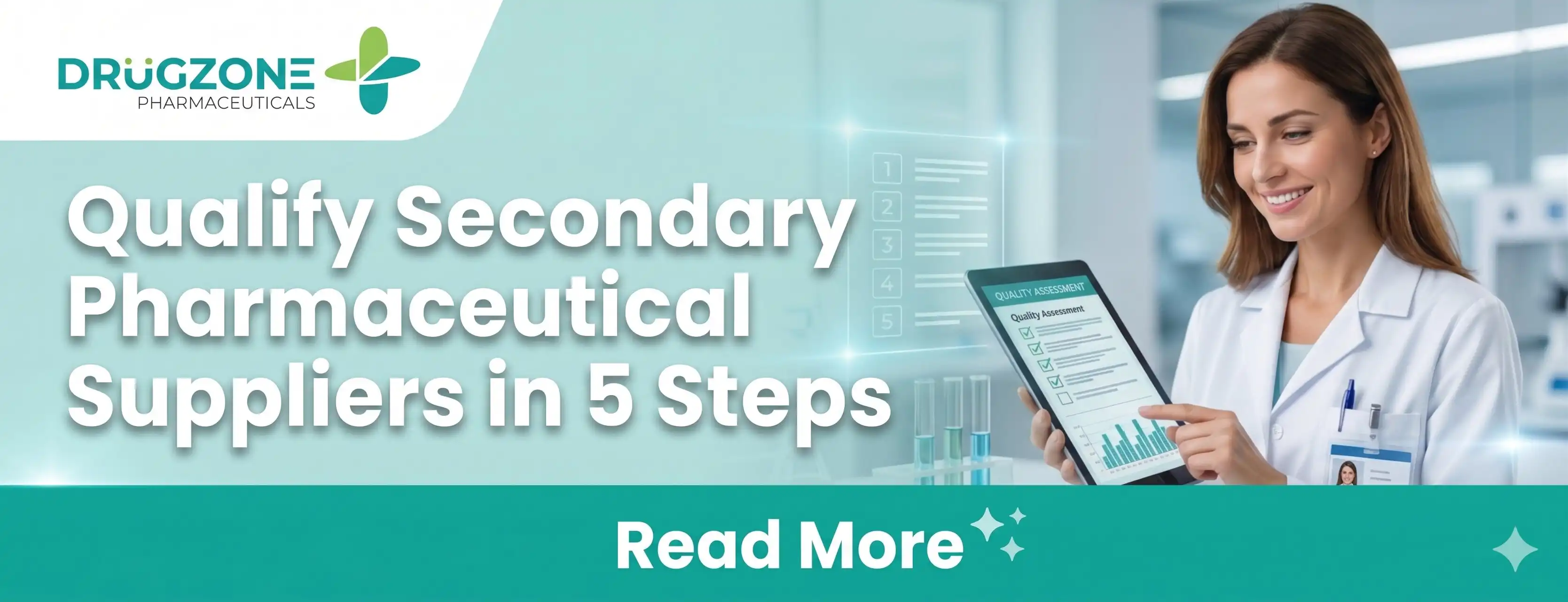
How to Qualify a Secondary Pharmaceutical Supplier in the USA in 5 Steps
Healthcare providers across the United States depend on steady access to medicines. Relying on a single supplier can create risks such as stock shortages, delayed deliveries, or pricing instability. That is why many hospitals, pharmacies, and clinics look for a secondary pharmaceutical supplier to support continuity.
Choosing the right partner is not only about pricing. It requires careful evaluation of compliance, product quality, and operational reliability. Below are five practical steps to qualify a secondary supplier with confidence.
Why a Secondary Supplier Matters
Before going into the steps, it is important to understand the purpose of a secondary supplier:
- Ensures backup during shortages or disruptions
- Supports cost control through competitive sourcing
- Reduces dependency on a single vendor
- Improves supply chain resilience
In a regulated market like the USA, working with verified pharma distributors in usa is essential to maintain compliance and patient safety.

Step 1: Verify Licensing and Regulatory Compliance
Compliance is the first and most critical step.
A qualified supplier must meet all federal and state regulations. Without this, there is a risk of handling counterfeit or improperly stored drugs.
What to check:
- Valid state pharmacy licenses
- Registration with regulatory bodies
- Compliance with DSCSA (Drug Supply Chain Security Act)
- Accreditation such as NABP (National Association of Boards of Pharmacy)
Why it matters:
- Ensures drug traceability
- Protects against counterfeit products
- Maintains legal and ethical standards
A supplier that cannot provide documentation should not be considered further.
Step 2: Evaluate Product Sourcing and Quality Assurance
The next step is to assess how the supplier sources its products.
A reliable secondary supplier should have transparent sourcing channels and partnerships with recognized manufacturers.
Key evaluation points:
- Source of drugs (authorized manufacturers or verified vendors)
- Batch-level traceability
- Expiry management systems
- Quality control procedures
Red flags:
- Lack of transparency in sourcing
- Unusually low pricing without justification
- No documentation for product origin
Working with trusted pharmaceutical wholesalers in usa helps ensure that medicines meet required safety standards.
Step 3: Assess Inventory Strength and Availability
A secondary supplier must be able to deliver when the primary supplier cannot.
This makes inventory depth and availability a key factor.
What to review:
- Range of SKUs (generic, branded, specialty drugs)
- Availability of critical medicines
- Backorder handling process
- Real-time inventory visibility
Why it matters:
- Prevents treatment delays
- Supports uninterrupted operations
- Ensures access to high-demand medications
A supplier with a strong inventory system can respond quickly during supply gaps.
Step 4: Review Logistics and Delivery Capabilities
Timely delivery is as important as product availability.
A qualified supplier should have a strong logistics network and the ability to maintain drug integrity during transit.
Important factors:
- Temperature-controlled shipping (cold chain management)
- Nationwide delivery coverage
- Delivery timelines and reliability
- Tracking and documentation systems
Questions to ask:
- How are temperature-sensitive drugs handled?
- What is the average delivery time?
- Are shipments traceable?
Reliable logistics ensure that products reach healthcare providers safely and on time.
Step 5: Evaluate Pricing Transparency and Support Services
While cost is important, it should not compromise quality or compliance.
A good secondary supplier offers clear pricing and value-added services.
What to consider:
- Transparent pricing structure
- Bulk purchase benefits
- Flexible ordering options
- Customer support responsiveness
Additional support to look for:
- Dedicated account management
- Assistance with compliance documentation
- Order tracking and issue resolution
A supplier that provides consistent support can become a long-term partner rather than just a backup vendor.
Common Mistakes to Avoid
While selecting a secondary supplier, many organizations make avoidable errors:
- Choosing based only on low pricing
- Ignoring compliance verification
- Not reviewing logistics capabilities
- Overlooking inventory limitations
- Skipping due diligence on sourcing
Avoiding these mistakes helps maintain both safety and operational efficiency.
Conclusion
Qualifying a secondary pharmaceutical supplier is not a one-time task. It is an ongoing process that ensures stability in a complex supply chain.
By focusing on compliance, product quality, inventory strength, logistics, and pricing transparency, healthcare providers can build a reliable backup system.
Companies like Drugzone support this approach by offering compliant distribution, verified sourcing, and dependable logistics across the United States. With a strong focus on safety and operational consistency, Drugzone serves as a trusted partner for healthcare organizations looking to strengthen their supply chain.
FAQs
1. Why is a secondary pharmaceutical supplier necessary?
A secondary supplier provides backup during shortages, delays, or pricing issues with the primary supplier, ensuring continuous access to essential medicines.
2. How can compliance of a supplier be verified?
Compliance can be checked through state licenses, DSCSA adherence, NABP accreditation, and proper documentation for product sourcing and traceability.
3. What is the biggest risk of choosing the wrong supplier?
The biggest risk is receiving counterfeit or improperly handled drugs, which can impact patient safety and lead to regulatory penalties.
Article Author

Binu .B RPH
President
With more than 20 years of experience in the pharmaceutical wholesale sector, I have Founded and managed several companies, including a pharmaceutical wholesale company, a compounding/retail pharmacy,and many more. As the president of Drugzone Pharmaceuticals Inc., I develop new business and maintain existing business relationships.
Tags
Latest Posts
-
Best 15 Pharmaceutical Wholesalers for Diabetic Care Product Sourcing
-
Top 10 Pharmaceutical Suppliers for Hospital and Health System Procurement
-

7 Things Oncology Clinics Should Check Before Choosing a Pharmaceutical Wholesale Distributor
-
9 Questions to Ask Pharmaceutical Suppliers in USA Before Opening an Account
-
Oncology drug procurement for hospitals: specialty distributor vs big wholesaler compared
Similar Posts
-
Best 15 Pharmaceutical Wholesalers for Diabetic Care Product Sourcing
-
Top 10 Pharmaceutical Suppliers for Hospital and Health System Procurement
-
7 Things Oncology Clinics Should Check Before Choosing a Pharmaceutical Wholesale Distributor
-
9 Questions to Ask Pharmaceutical Suppliers in USA Before Opening an Account
-
Oncology drug procurement for hospitals: specialty distributor vs big wholesaler compared