Posted On: May 20, 2026
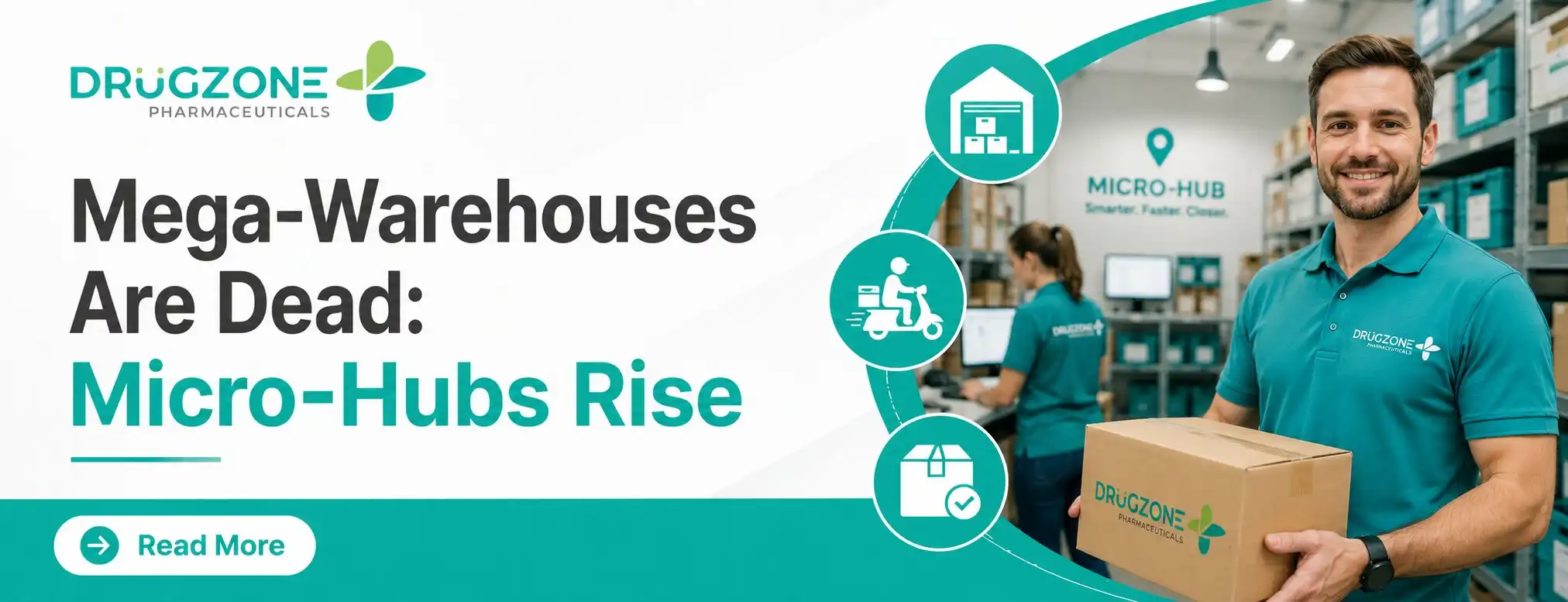
The Death of the 'Mega-Warehouse': The Rise of Micro-Distribution Hubs
The pharmaceutical supply chain is going through a clear shift. For years, large centralized warehouses were the backbone of distribution. These facilities handled bulk storage and shipped products across long distances. That model worked when demand patterns were predictable and delivery timelines were less strict.
Today, expectations have changed. Healthcare providers need faster deliveries, better inventory control, and consistent availability of critical medicines. This shift has led to a new model—micro-distribution hubs located closer to urban centers.
Why Mega-Warehouses Are Losing Ground
Mega-warehouses are not disappearing overnight, but their dominance is reducing. Several factors are driving this change:
1. Increasing Demand for Faster Deliveries
- Hospitals and pharmacies often require same-day or next-day delivery
- Delays can impact patient care and treatment schedules
- Long-distance shipping from centralized warehouses cannot always meet urgent needs
2. Urban Population Growth
- Cities are expanding rapidly
- Demand for medicines is concentrated in urban and semi-urban regions
- Being closer to these areas reduces transit time
3. Supply Chain Disruptions
- Global disruptions have exposed weaknesses in long supply chains
- Dependence on a few large facilities creates risk
- Decentralization helps maintain continuity
4. Regulatory Requirements
- Drug traceability and storage standards have become stricter
- Smaller hubs allow better control over handling and compliance
What Are Micro-Distribution Hubs?
Micro-distribution hubs are smaller storage and fulfillment centers located within or near major cities. They are designed to serve a specific region with quick turnaround times.
Key Characteristics
- Located within urban or suburban zones
- Hold limited but high-demand inventory
- Support frequent restocking
- Enable faster last-mile delivery
Unlike mega-warehouses, these hubs focus on speed and proximity rather than bulk storage.
How Micro-Hubs Improve Pharmaceutical Distribution
1. Faster Delivery Cycles
- Orders can be fulfilled within hours instead of days
- Critical medicines reach patients without delay
2. Better Inventory Management
- Stock is aligned with local demand patterns
- Reduces overstocking and stockouts
3. Reduced Transportation Costs
- Shorter delivery routes lower fuel and logistics expenses
- Less dependency on long-haul transport
4. Improved Product Handling
- Sensitive medicines require controlled environments
- Smaller hubs make monitoring easier
Impact on Pharmaceutical Suppliers and Distributors
The shift toward micro-hubs is changing how pharmaceutical suppliers and logistics teams operate. Traditional models focused on scale, but the new approach focuses on responsiveness.
Key Changes in Operations
- More frequent but smaller shipments
- Real-time inventory tracking
- Increased coordination between multiple locations
- Greater use of local delivery networks
For drugs distributors, this means adapting systems and processes to handle decentralized operations while maintaining compliance.
Technology Driving the Shift
The move toward micro-distribution hubs is supported by modern tools and systems.
Key Technologies in Use
- Inventory Management Systems
Track stock levels across multiple locations - Demand Forecasting Tools
Predict local demand based on past data - Cold Chain Monitoring
Ensure temperature-sensitive drugs remain safe - Route Optimization Software
Plan faster and more reliable deliveries
These tools help maintain control even when operations are spread across several hubs.
Challenges of Micro-Distribution Hubs
While the model offers many advantages, it also comes with challenges:
1. Higher Setup Costs
- Multiple facilities require investment
- Infrastructure must meet strict compliance standards
2. Complex Coordination
- Managing inventory across several hubs can be difficult
- Requires strong systems and trained teams
3. Limited Storage Capacity
- Smaller hubs cannot store large quantities
- Requires accurate demand planning
4. Regulatory Compliance
- Each hub must meet licensing and safety requirements
- Continuous monitoring is required
Despite these challenges, the benefits often outweigh the limitations.
Why Urban Proximity Matters
Being close to urban centers offers clear advantages in pharmaceutical distribution:
- Faster response to urgent medical needs
- Better access to hospitals and clinics
- Reduced delivery delays during peak hours
- Improved patient outcomes due to timely supply
Urban proximity is no longer optional. It has become a core part of distribution planning.
Future of Pharmaceutical Distribution
The future is likely to combine both models:
Hybrid Approach
- Mega-warehouses for bulk storage
- Micro-hubs for rapid delivery
This combination allows distributors to balance cost, speed, and reliability.
What to Expect Next
- More localized inventory strategies
- Expansion of regional distribution networks
- Increased use of automation in smaller hubs
- Stronger focus on compliance and traceability
The goal is simple: deliver the right medicine at the right time without delay.
Role of Companies Like Drugzone
Companies such as Drugzone Pharmaceuticals Inc. are already aligned with this evolving model. As a trusted name in pharmaceutical distribution, Drugzone focuses on:
- Maintaining a strong inventory of essential medicines
- Ensuring compliance with industry standards
- Supporting healthcare providers with reliable supply
- Expanding distribution capabilities to meet demand
By adapting to changing supply chain needs, Drugzone supports the shift toward faster and more localized delivery systems. This approach helps healthcare providers maintain continuity and serve patients without interruption.
Conclusion
The era of relying only on large centralized warehouses is changing. Micro-distribution hubs are becoming an important part of modern pharmaceutical logistics. They bring speed, flexibility, and better control over supply chains.
As demand continues to grow in urban areas, distributors must rethink how they store and deliver medicines. The focus is moving from scale to responsiveness. Organizations that adopt this model will be better prepared to meet the needs of healthcare providers and patients alike.
FAQs
1. What is a micro-distribution hub in pharmaceuticals?
A micro-distribution hub is a small storage and delivery center located near urban areas. It holds high-demand medicines and enables faster delivery to nearby healthcare facilities.
2. Why are mega-warehouses becoming less popular?
Mega-warehouses often involve long shipping distances and slower delivery times. Modern healthcare needs quicker access to medicines, which smaller local hubs can provide.
3. How do micro-hubs improve patient care?
Micro-hubs reduce delivery time, ensure better availability of medicines, and support faster response during emergencies. This helps healthcare providers treat patients without delay.
Article Author

Binu .B RPH
President
With more than 20 years of experience in the pharmaceutical wholesale sector, I have Founded and managed several companies, including a pharmaceutical wholesale company, a compounding/retail pharmacy,and many more. As the president of Drugzone Pharmaceuticals Inc., I develop new business and maintain existing business relationships.
Tags
Latest Posts
-
Best 15 Pharmaceutical Wholesalers for Diabetic Care Product Sourcing
-
Top 10 Pharmaceutical Suppliers for Hospital and Health System Procurement
-

7 Things Oncology Clinics Should Check Before Choosing a Pharmaceutical Wholesale Distributor
-

9 Questions to Ask Pharmaceutical Suppliers in USA Before Opening an Account
-
Oncology drug procurement for hospitals: specialty distributor vs big wholesaler compared
Similar Posts
-

PBM Reform 2026: How the New Rebate Pass-Through Law Affects Distributors
-
How to Handle "Saleable Returns" Under New FDA Verification Guidelines
-
How to Offset the 15% Pharma Import Tariffs by Sourcing from US-Based Suppliers
-

Top 10 Pharmaceutical Suppliers in the USA for Specialized Oncology Meds
-

What the FDA's Latest Guidance Means for Pharmaceutical Wholesalers