Posted On: March 25, 2026
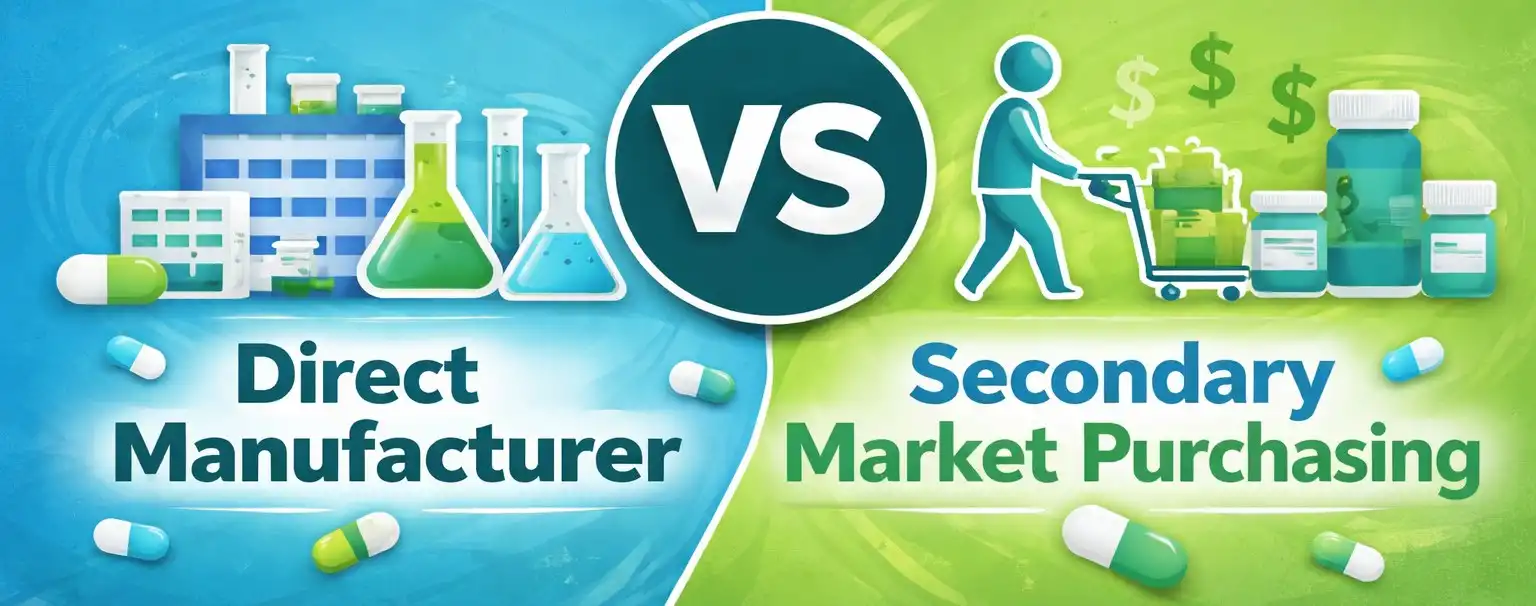
Direct Manufacturer vs Secondary Market Purchasing-Drugzone's Guide
When pharmacies, hospitals, and healthcare facilities make purchasing decisions, one of the most important choices they face is where to source their pharmaceutical products. Should they buy directly from the manufacturer, or is the secondary market a viable option? This guide breaks down both approaches in a clear and honest way, so healthcare buyers can make well-informed decisions for their operations.
What Is Direct Manufacturer Purchasing?
Direct manufacturer purchasing means buying pharmaceutical products straight from the company that makes them. There is no middleman involved. The buyer deals directly with the brand or generic drug manufacturer.
Key advantages of this approach include:
- Guaranteed product authenticity — you know exactly where the product came from.
- Direct accountability — if there is a product issue, you deal with the source.
- Consistent supply chain — manufacturers have stable stock for their own products.
- Manufacturer warranties and return policies are easier to navigate.
However, direct purchasing also has limitations. Manufacturers often set minimum order quantities that may not suit smaller buyers. Pricing may not always be competitive, and manufacturers typically do not offer the breadth of products that a distributor would. For a pharmacy or hospital sourcing hundreds of different SKUs, going directly to every manufacturer is simply not practical.
What Is Secondary Market Purchasing?
The secondary market refers to purchasing pharmaceutical products through channels other than the original manufacturer. This includes authorized wholesale distributors, gray market sellers, and online resellers. Not all secondary market sources are the same, and this is where healthcare buyers need to be careful.
There are two types of secondary market sources:
- Authorized distributors — Licensed, compliant, and regulated wholesale distributors who purchase products from manufacturers and resell them to healthcare buyers. These are legitimate and often preferred.
- Unauthorized or gray market sellers — Sources that operate outside the regulated supply chain. These carry serious risks including expired stock, counterfeit products, improper storage, and no traceability.
When working with top distributors in USA, buyers benefit from a wide product range, competitive pricing, and compliance with federal regulations like DSCSA (Drug Supply Chain Security Act). A reputable distributor bridges the gap between the manufacturer and the end buyer efficiently.
Comparing the Two: What Should Healthcare Buyers Consider?
Here is a practical comparison across key factors:
- Product Range: Direct manufacturers only supply their own products. A licensed distributor carries thousands of SKUs across multiple brands and categories.
- Pricing: Manufacturers may offer lower per-unit pricing for high-volume orders, but distributors often negotiate bulk pricing on behalf of their customers and pass on savings.
- Compliance: Both direct manufacturers and licensed distributors must meet FDA and DSCSA standards. Unauthorized secondary sellers may not.
- Convenience: Distributors simplify procurement by offering a one-stop solution for multiple products under a single purchase order.
- Product Authenticity: Both direct and authorized distributors maintain chain-of-custody documentation. Unregulated sources cannot guarantee this.
- Availability: Licensed distributors often carry safety stock and can fulfill orders faster during supply shortages.
The Risks of Buying From Unverified Sources
Purchasing pharmaceutical products from unverified secondary market sellers is one of the biggest risks in healthcare supply chains. The consequences are not just financial — they can directly impact patient safety.
Risks include:
- Counterfeit or substandard medications entering the supply chain.
- Products stored outside required temperature and humidity conditions.
- No product traceability or lot tracking, making recalls impossible to manage.
- Regulatory penalties for purchasing from non-compliant sources.
- Potential license suspension for pharmacies and healthcare facilities.
This is why buyers should always verify that any secondary market source is properly licensed and DSCSA-compliant before placing an order.
Why Licensed Wholesale Distributors Are Often the Smarter Choice
For most healthcare buyers — especially independent pharmacies, specialty clinics, and hospitals — working with a licensed wholesale distributor is the most practical and cost-effective purchasing model. When evaluating the otc wholesale distributors market, buyers often find that licensed distributors offer better flexibility, faster turnaround, and a wider product selection compared to going directly to individual manufacturers.
Benefits of working with licensed distributors:
- Access to thousands of products from multiple manufacturers in one place.
- Real-time inventory visibility and order tracking.
- Regulatory compliance built into the supply chain.
- Dedicated account support and flexible payment terms.
- Managed returns and recall support.
That said, direct manufacturer purchasing still makes sense for large health systems or GPOs (group purchasing organizations) that have the volume to negotiate directly and the infrastructure to manage complex supplier relationships.
How to Evaluate Any Purchasing Source
Whether you are buying directly from a manufacturer or through a distributor, here are questions every healthcare buyer should ask:
- Is the supplier licensed in my state and registered with the FDA?
- Do they provide full pedigree and lot traceability documents?
- Are they DSCSA-compliant and NABP accredited?
- What are their storage and cold chain handling standards?
- Do they have a clear return and recall process?
- Can they provide references from similar buyers?
A reliable source — whether a manufacturer or distributor — will have no difficulty answering these questions with supporting documentation.
About Drugzone: Simplifying Pharmaceutical Purchasing
When it comes to choosing a trustworthy purchasing partner, Drugzone Pharmaceuticals Inc. stands out as a fully licensed wholesale pharmaceutical distributor based in New York. Serving pharmacies, hospitals, long-term care facilities, and veterinary clinics across the United States, Drugzone offers access to over 2,000+ SKUs covering both human health and animal health categories.
Drugzone operates in full compliance with FDA, DSCSA 2025, and NABP accreditation standards. With real-time order tracking, automated inventory management, and dedicated account support, Drugzone makes pharmaceutical procurement straightforward, transparent, and reliable.
For healthcare buyers looking to simplify their supply chain without compromising on product quality or compliance, Drugzone represents the kind of trusted, authorized distributor relationship that makes both financial and regulatory sense. Whether you are comparing options from the list of distributors in USA or looking to consolidate your current purchasing process, Drugzone is built to support your operation at every step.
Frequently Asked Questions (FAQs)
Q1. Is it safe to buy pharmaceuticals from the secondary market?
It depends entirely on the source. Purchasing from a licensed, DSCSA-compliant wholesale distributor in the secondary market is generally safe and legal. These distributors are regulated, maintain full product traceability, and meet federal and state licensing requirements. The risk comes when buyers purchase from unverified or gray market sellers who operate outside the regulated supply chain. Always verify licensing, accreditation, and compliance documentation before placing any order.
Q2. When does it make sense to buy directly from a pharmaceutical manufacturer?
Direct manufacturer purchasing makes the most sense for large health systems, hospital networks, or group purchasing organizations (GPOs) that have the volume to meet minimum order requirements and the staff to manage multiple supplier relationships. For independent pharmacies and smaller healthcare facilities, the administrative and logistical burden of buying directly from many manufacturers often outweighs the potential cost savings. A licensed distributor offers a simpler, consolidated alternative.
Q3. How do I verify that a pharmaceutical distributor is legitimate?
Start by checking whether the distributor holds an active state wholesale distributor license and is registered with the FDA. Look for NABP accreditation and confirm that they are compliant with DSCSA requirements. A legitimate distributor will readily provide product pedigree documents, lot numbers, and expiration dates with every shipment. You can also verify licenses directly through your state board of pharmacy or the FDA's website.
Article Author

Binu .B RPH
President
With more than 20 years of experience in the pharmaceutical wholesale sector, I have Founded and managed several companies, including a pharmaceutical wholesale company, a compounding/retail pharmacy,and many more. As the president of Drugzone Pharmaceuticals Inc., I develop new business and maintain existing business relationships.
Tags
Latest Posts
-
Best 15 Pharmaceutical Wholesalers for Diabetic Care Product Sourcing
-
Top 10 Pharmaceutical Suppliers for Hospital and Health System Procurement
-

7 Things Oncology Clinics Should Check Before Choosing a Pharmaceutical Wholesale Distributor
-
9 Questions to Ask Pharmaceutical Suppliers in USA Before Opening an Account
-
Oncology drug procurement for hospitals: specialty distributor vs big wholesaler compared