Posted On: October 22, 2026
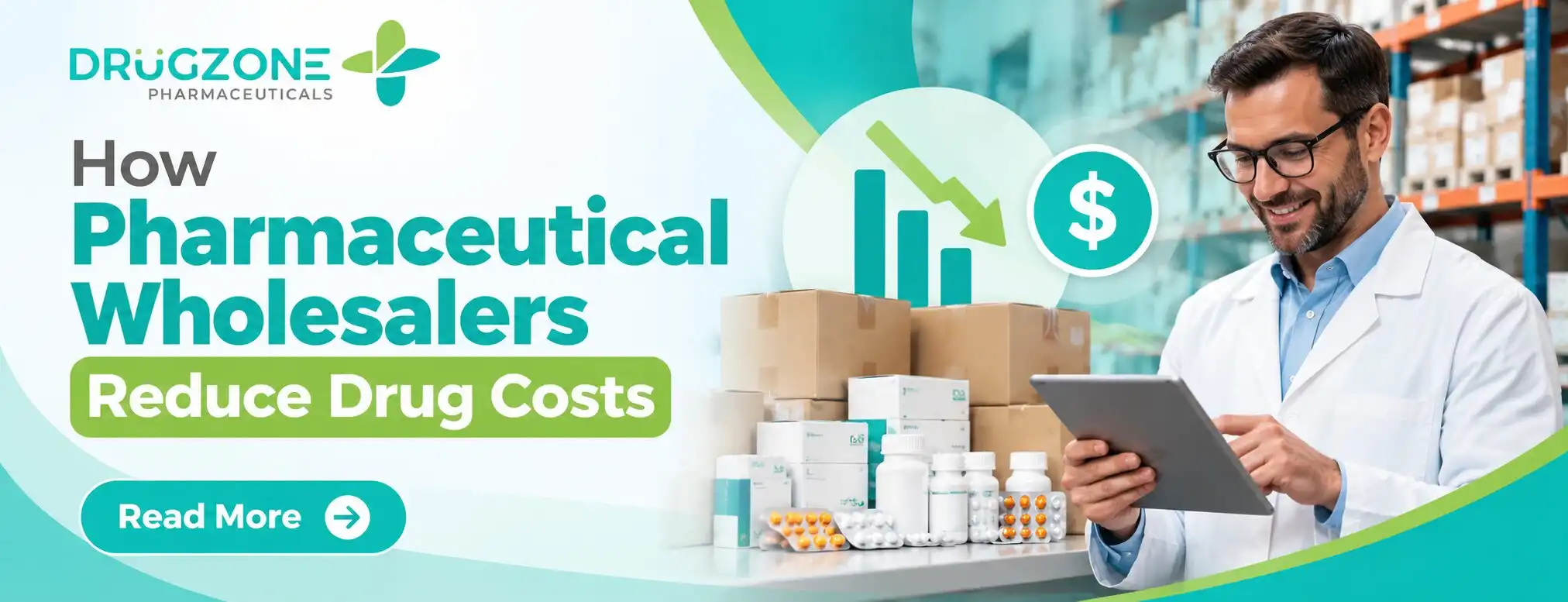
How Pharmaceutical Wholesalers Help Pharmacies Reduce Drug Purchasing Costs
Drug costs are the largest controllable line item for most pharmacies. Reimbursement is shaped by payers and PBMs, so the margin a pharmacy keeps depends heavily on what it pays at the point of purchase. That is where Pharmaceutical Wholesalers do their quiet work. Pharmaceutical Wholesalers sit between manufacturers and pharmacies, and the way they price, package, and ship each order shapes store economics month after month. The right supply partnership can shift a store from thin margins to steady ones, without any change to the patients walking in the door.
This article is written for pharmacy owners and buyers. It is business guidance and does not replace clinical judgment or a formal contract review.
Why Drug Purchasing Decisions Matter More Than Ever
According to the Association for Accessible Medicines 2026 savings report, generics and biosimilars saved the U.S. health system $496 billion in 2025. Generics made up 89 percent of prescriptions dispensed, yet accounted for only 11.6 percent of total drug spending. That gap is the opportunity. Most of a pharmacy's volume is in low-cost generics, and small changes in how those are bought add up quickly.
For an independent store filling hundreds of generic prescriptions a day, a one percent change in acquisition cost can be the difference between a profitable quarter and a flat one. That is why the relationship with Pharmaceutical Wholesalers deserves a yearly review, not a set-and-forget treatment. Pharmacies that treat their primary wholesaler as a strategic partner consistently capture more value than those that treat it as a vendor.
“Generic rebates generally rise as you buy more generics,” notes PBA Health in its guidance on wholesaler contracts, “and a well-managed rebate structure can yield several thousand extra dollars a month, or hundreds of thousands a year.” That is a plain restatement of why pharmacies work closely with Pharmaceutical Wholesalers rather than switching on list price alone.
Ten Ways Pharmaceutical Wholesalers Help Pharmacies Cut Drug Purchasing Costs
Pharmacies save in different ways across their supply relationship. The ten mechanisms below are the ones that show up most often in real pharmacy savings, drawn from industry guidance on wholesaler agreements and generic economics.
1. Negotiated Pricing and Generic Rebate Tiers
Agreements with Pharmaceutical Wholesalers are built around tiered pricing. The more a pharmacy buys from a given category, the better the rate becomes. Generic rebate tiers are the most important of these. According to PBA Health, generic rebates rise as both the compliance ratio and the generic dollar volume go up, and a well-managed rebate structure can yield several thousand extra dollars a month.
2. Prime Vendor Agreements and Compliance Ratios
A prime vendor agreement commits a pharmacy to one of its Pharmaceutical Wholesalers for most of its purchases. In return, the pharmacy earns better pricing, deeper rebates, and access to programs that secondary suppliers rarely match. The core number to watch is the generic compliance ratio. If it drops, so does the rebate tier, so buying teams track it in real time.
3. Prompt-Pay and Payment Term Discounts
Payment terms are another lever. Many Pharmaceutical Wholesalers offer a discount for paying invoices early, and the discount often beats the cost of short-term working capital. Terms vary, but a pharmacy that pays promptly can convert its cash cycle into real savings every month. Review these terms with your finance team before signing a new agreement.
4. Access to Specialty, Brand, and Biosimilar Programs
Specialty drugs and biosimilars often sit outside day-to-day generic ordering. Pharmaceutical Wholesalers that offer specialty programs can give a pharmacy access to higher-margin brand and biosimilar SKUs, with the licensing and documentation already in place. For a store adding a new service line, that reduces the cost and time of standing up a new supplier account.
5. Shortage Management and Backup Sourcing
A missed fill costs more than a lost sale. Patients move accounts. The best Pharmaceutical Wholesalers flag constrained items early, suggest approved alternates, and help a pharmacy avoid last-minute purchases from secondary sources at inflated prices. Shortage visibility inside an ordering portal is now a standard feature rather than a premium add-on.
6. DSCSA-Aligned Sourcing That Protects Margin
Verified transaction data and lot-level product identifiers are not just compliance. They protect margin. A pharmacy that cannot prove where a product came from faces questions during an audit, and may end up writing off stock. DSCSA-ready Pharmaceutical Wholesalers keep that risk off the balance sheet by making traceable documentation routine.
7. Returns, Credits, and Invoice Accuracy
Even a careful wholesaler sometimes misprices an item. PBA Health has reported finding more than $1.6 million in pricing discrepancies for client pharmacies in a single year of audits. A supply partner with a clean credit and returns process makes it easier to recover those dollars. Ask every supplier for a documented returns policy before you place an order.
8. Technology and Ordering Tools That Save Staff Time
Labor is a hidden cost in purchasing. Electronic ordering, real-time stock visibility, and automated reorder points reduce the hours a pharmacist spends on buying. The best Pharmaceutical Wholesalers offer platforms that surface shortage alerts and rebate dashboards in one place, so decisions do not depend on a quarterly phone call.
9. Group Purchasing and PSAO Leverage
Independent pharmacies often buy through a group purchasing organization or a pharmacy services administrative organization. These groups negotiate on behalf of many stores at once, which strengthens pricing without the pharmacy having to commit huge volume on its own. Pharmaceutical Wholesalers that work smoothly with your GPO or PSAO are worth more than ones with a slightly lower list price.
10. Advisory Support From Account Teams
The best Pharmaceutical Wholesalers do not stop at delivering boxes. Their account teams review purchasing patterns, flag drift in the compliance ratio, and suggest ways to improve mix. For an owner running a store with a small team, that outside perspective can be the difference between catching a problem early and finding it in a year-end profit and loss review.
Where the Savings Actually Come From
The table shows the main savings levers a pharmacy can pull through its wholesaler, with a rough indication of impact and effort. Use it to prioritize where to start.
| Lever | Typical Impact | Effort to Capture | Where to Confirm |
|---|---|---|---|
| Generic rebate tier | High | Medium | Prime vendor agreement |
| Generic compliance ratio | High | Low | Monthly purchasing report |
| Prompt-pay discount | Medium | Low | Payment terms clause |
| Invoice accuracy audit | Medium | Medium | Finance review |
| Shortage alert routing | Medium | Low | Ordering portal |
| Returns and credit policy | Medium | Low | Returns clause in contract |
| GPO or PSAO pricing | High | Low | Group contract summary |
| Specialty or biosimilar access | Medium | Medium | Specialty program terms |
| Electronic ordering automation | Low | Medium | Platform setup |
| Account team review cadence | Medium | Low | Quarterly business review |
Questions to Ask Before You Sign a Wholesaler Agreement
A contract review often surfaces more savings than renegotiating list prices. The following questions help a pharmacy owner compare offers on equal terms:
- What is the generic compliance ratio required for each rebate tier, and how is it measured?
- Which generic substitutions count toward the compliance ratio, and which do not?
- What prompt-pay discount is available, and what are the standard payment terms?
- How does the wholesaler communicate shortages, allocations, and alternates?
- What is the documented process for returns, credits, and short-dated product?
- How is DSCSA transaction data delivered with each shipment?
- Is specialty, brand, and biosimilar access included or sold separately?
- How often does the account team meet with the pharmacy to review purchasing data?
Comparing two or three pharmacy wholesale distributors on these questions gives a pharmacy owner a much clearer picture than a brochure or a sample price list ever could.
A Simple Monthly Routine That Protects Margin
Even with the right contract in place, savings slip without discipline. A short monthly routine keeps the gains compounding rather than drifting away:
- Review the generic compliance ratio and act on any drop before it changes the rebate tier.
- Spot-check ten random invoices against the contract price list.
- Confirm all credits and returns from the previous month have been posted.
- Scan the shortage dashboard and plan alternates for the top five constrained SKUs.
- Note any switches to secondary suppliers and the reason behind each one.
Thirty minutes a month is usually enough to run this routine. The savings it protects across a year make it one of the highest-return habits an owner can build with their pharmacy wholesale distributors.
How Pharmaceutical Wholesalers Price Products
It helps to understand the pricing mechanics before negotiating. Most generic prices quoted by Pharmaceutical Wholesalers are discounts off the Wholesale Acquisition Cost, or WAC. That number is set by the manufacturer. A wholesaler then adds a markup, offers a discount tier, and layers rebates on top. The final price a pharmacy pays depends on all three.
Brand drug pricing works differently. A pharmacy usually pays close to WAC, with a small percentage discount. Margin on brand products comes mostly from reimbursement, not from purchase price. That is why brand drugs rarely drive the savings Pharmaceutical Wholesalers offer through their agreements, even though brand drugs can account for most of a pharmacy's dollar volume.
Generic pricing is where the real negotiation happens. Generic prices can change multiple times a day, and a 25 percent discount from one of your Pharmaceutical Wholesalers can still be well above the market price at another. That is why a monthly invoice spot-check is worth the time, even for a pharmacy that trusts its primary vendor completely.
Common Mistakes That Cost Pharmacies Money
A few errors show up across pharmacies of every size. None are hard to fix once spotted:
- Ignoring the compliance ratio until the quarterly rebate statement arrives.
- Accepting too many substitutions, which can cost 15 to 20 percent more and do not count toward rebate tiers.
- Letting prompt-pay discounts lapse during a tight cash month.
- Skipping the invoice audit, which is where small pricing errors hide.
- Treating the wholesaler as a vendor instead of a partner, and skipping the quarterly business review.
Where Drugzone Fits
Drugzone Pharmaceuticals is one of the nationally licensed Pharmaceutical Wholesalers serving healthcare providers across all 50 states. Its model centers on verified sourcing, DSCSA-aligned documentation, and account support that treats purchasing as a continuing conversation rather than a one-off transaction. For a pharmacy that wants a dependable primary account or a second source for backup, Drugzone combines the scale of national Pharmaceutical Wholesalers with hands-on service that smaller independents rarely find.
Ready to review your purchasing mix with one of the leading pharmaceutical wholesalers in the country? Visit drugzone.com to see the product catalog and account setup process. Speak with our team to review your current contract terms, licensing coverage, and savings opportunities.
Frequently Asked Questions
How do Pharmaceutical Wholesalers actually reduce drug purchasing costs?
Wholesalers deliver savings through tiered generic rebates, prompt-pay discounts, specialty program access, shortage planning, and clean invoicing. The biggest lever is usually the generic compliance ratio inside a prime vendor agreement.
What is a prime vendor agreement?
A prime vendor agreement is a contract that commits a pharmacy to buy most of its products from a lead wholesaler. In exchange, the pharmacy earns better pricing, deeper rebates, and access to additional programs.
How often should a pharmacy review its wholesaler contract?
At minimum, once a year. A quarterly business review with the account team is better. Add a monthly check of the generic compliance ratio and invoice accuracy to protect savings between formal reviews.
Should a pharmacy use more than one of these Pharmaceutical Wholesalers?
Many do. A primary account with one of the national Pharmaceutical Wholesalers captures the best pricing. A secondary account provides backup when the primary runs short. The trick is keeping the compliance ratio with the primary high enough to protect rebate tiers.
Article Author

Binu .B RPH
President
With more than 20 years of experience in the pharmaceutical wholesale sector, I have Founded and managed several companies, including a pharmaceutical wholesale company, a compounding/retail pharmacy,and many more. As the president of Drugzone Pharmaceuticals Inc., I develop new business and maintain existing business relationships.
Tags
Latest Posts
-
Pharmaceutical Wholesale Agreements: What to Review Before You Sign (Checklist, Not Legal Advice)
-
Top 10 Factors to Consider When Selecting a Pharmaceutical Supplier for Multi-Location Clinics
-

Top 10 Essential Pharmaceuticals Independent Pharmacies Should Stock From a Pharmaceutical Wholesale Distributor
-
Top 10 State Licensing Requirements Every Licensed pharmaceutical wholesaler Must Meet
-

Top 10 Oncology Distributors in the USA: A Buyer's Guide for Healthcare Purchasers
Similar Posts
-
Pharmaceutical Wholesale Agreements: What to Review Before You Sign (Checklist, Not Legal Advice)
-
Top 10 Factors to Consider When Selecting a Pharmaceutical Supplier for Multi-Location Clinics
-
Top 10 State Licensing Requirements Every Licensed pharmaceutical wholesaler Must Meet
-
Top 10 Oncology Distributors in the USA: A Buyer's Guide for Healthcare Purchasers
-
DSCSA Requirements for Pharmaceutical Distributors: What Pharmacies Must Verify With Suppliers in 2026